An ecology of order that flows like water
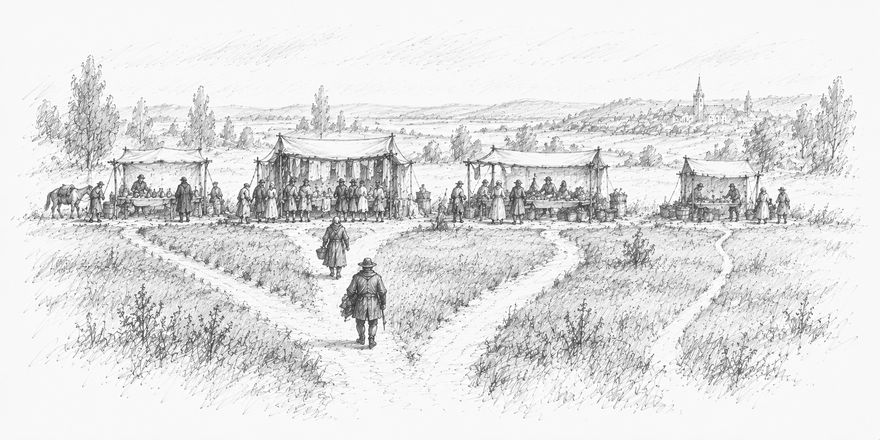
A decentralized order of right is like a web of rivers running into one another. Different ecologies of trust, made by different people, flow through it, each with its own rules, arbiters and users; a person can follow one branch downstream, move over to another, or draw off a new branch of their own.
When the infrastructure becomes this cheap, what really matters is the will of each keeper of order. With no moat of violence to shelter behind, market competition guarantees one thing: whoever overdraws the credit of their own order is soon punished by the market.
When an organization begins to go bad, the first signals come from its members: some speak up and complain, some turn and leave. Leaving is the more direct of the two, and all it needs is a road to take. When leaving is costly, an organization can let complaints pile up, and decay accumulates out of sight; when leaving is cheap, every bit of decay shows at once as customers lost.
In this system a contract is deployed once and anyone can use it afterwards; setting up another set of rules takes only deploying a new contract, at a cost of about one on-chain transaction fee. The road out therefore stays open, and the water level of each river records at every moment how many people still choose to stay, and so shows at every moment what that river is worth on the market.
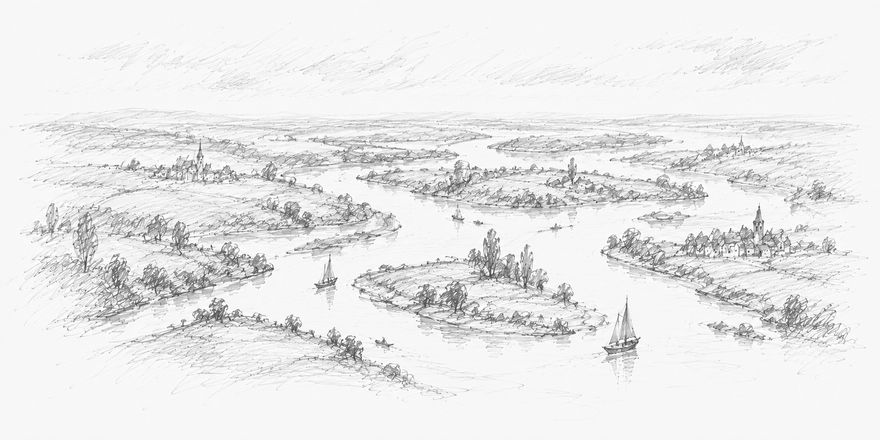
When a provider of order loses its credit, its customers turn to the one next door, and everything else keeps running as usual. When a castle falls, no one inside is spared; when one branch of the river runs dry, the water flows another way. Because every provider can afford to fall, failure can happen often and on a small scale, and the catastrophic collapses that kept recurring in the age of states have no room to happen.
Anyone who objects to a set of rules can copy it as it stands, change the parts they object to and leave with their own records, while everyone else can go on using the original. This path is open because all the protocols and products are open source, free for anyone to take. In the old order, once the rules went bad, the only ways out were to defeat the violence commanded by those who made them, or to leave the territory they governed; here the way out is to set up another set of rules at almost no cost, without having to defeat anyone or win anyone over.
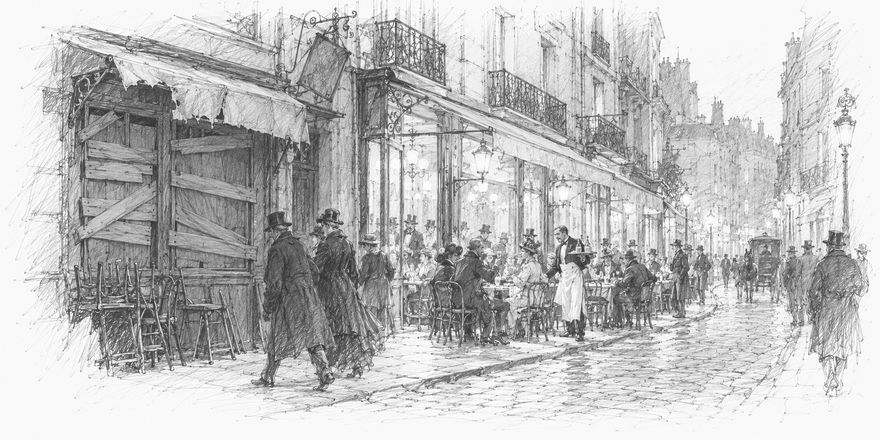
A single restaurant is fragile: a chef leaving, one bad night, a street gone quiet, any of these can close it; and precisely because each one can fail, a city’s restaurants as a whole keep getting better, as the one that closes leaves its lessons and its customers to the one next door, and the whole trade learns from one small failure after another. If every restaurant were underwritten by the state, the city’s food would only get worse year by year.
In the age of states, the reality at the core of power runs the opposite way: the guarantee is concentrated in one place, failure is put off again and again, and the longer it is put off, the greater the final collapse. In 2008 the failure of a single investment bank nearly brought down the financial system of the entire world. In a decentralized order of right, every provider of order is more like that restaurant: when its credit falls, customers move next door; when one branch of the river runs dry, the water flows another way.
The hard fork after The DAO affair was itself a demonstration of this way out. Most of the Ethereum community upgraded their software and returned the stolen money to its owners; others held that what is written on the chain should stay as written, kept running the original software, and that chain carried on under the name Ethereum Classic.
At the moment of the fork, both sides kept what they wanted: each took the full record from before the split and went on under the rules it accepted, and both are still running today. The one difference is how the market has priced the two consensuses in the years since. In the old order, a disagreement like this would usually have ended in a civil war or an exodus; here, all that happened was a fork that cost nothing.

Who sets the measure of value changes as well.
In an order bundled by state sovereignty, what a thing is worth and who owns it are decided by standards of allocation defined at the centre. Since all cooperation needs that centre’s guarantee, the shrewdest choice is naturally to sit at its bottlenecks and draw off resources, and so resources flow disproportionately to those best at finding such positions.
Once these people have drained not only society’s present but even the future wealth that society overdrew because the guarantee existed, the benefits the state’s guarantee can offer no longer make up for the damage it does, and order survives in name alone.
China’s 1994 tax-sharing reform brought most tax revenue under the central government while leaving local governments’ spending responsibilities where they were, and the gap came to be filled by selling land-use rights. Local governments were the sole suppliers of land in their areas: land prices pushed up house prices, and house prices in turn propped up land prices; land was mortgaged to banks for loans to build roads and cities, the cities grew larger and larger, and the debt rolled up ever larger with them.
A generation’s savings flowed along this chain into housing: many families staked a lifetime’s savings and the next thirty years of income on a promise priced by the guarantor. In 2021 revenue from the sale of state land-use rights nationwide peaked at about 8.7 trillion yuan, then fell year after year, to only about 4.9 trillion yuan by 2024. The “three red lines” introduced the year before tightened developers’ financing, Evergrande soon defaulted, and building sites stalled across the country; in the summer of 2022, buyers still waiting for their homes jointly announced online that they would stop paying their mortgages; in January 2024 a Hong Kong court ordered Evergrande wound up.
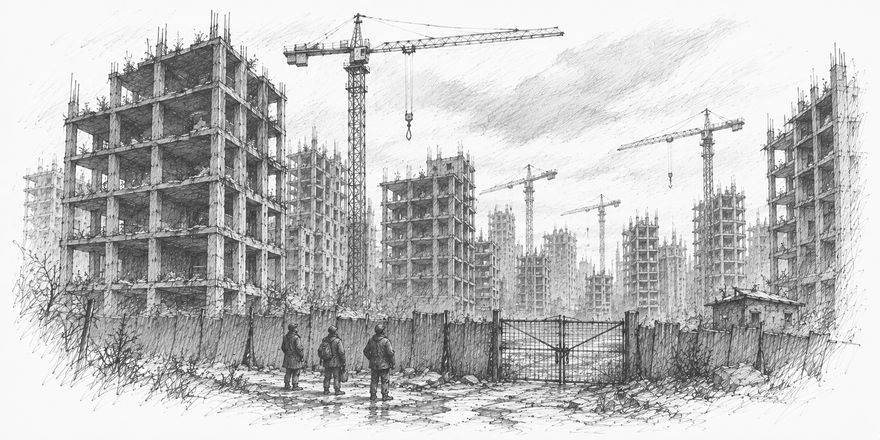
When the price of land has overdrawn decades of future income, the damage the guarantee does outweighs the good it can offer, and tower after tower, standing only as a frame, stays fixed on the day it was abandoned.
In a decentralized order of right, by contrast, the value of an order, or of a product, is measured by the choices of each person who needs it. The strategy of the game turns around: the most profitable skill becomes making things others are willing to choose. When one order goes bad, people leave it for another; every order competes to be chosen, and the environment as a whole tends to improve.
In August 1991, a Finnish student named Linus Torvalds posted in a newsgroup that he was writing an operating system kernel, just a hobby, and that it would stay small. He made the code public, for anyone to take and modify.
Over thirty years Linux became, step by step, the foundation of servers, phones and supercomputers, carried all the way by the choices of its users: since 2017 all of the world’s five hundred fastest supercomputers have run Linux, and Android, used by most of the world’s smartphones, is built on its kernel as well.
Its value accumulated from one choice after another: a company chooses it because it is reliable, modifiable and affordable; a developer writes code for it because they use it themselves. When value is measured by those who need it, people naturally want to make things others are willing to choose, and the paths people wear into the ground lead there of their own accord.