Non-negotiable principles
Decentralized right rests on a few principles.
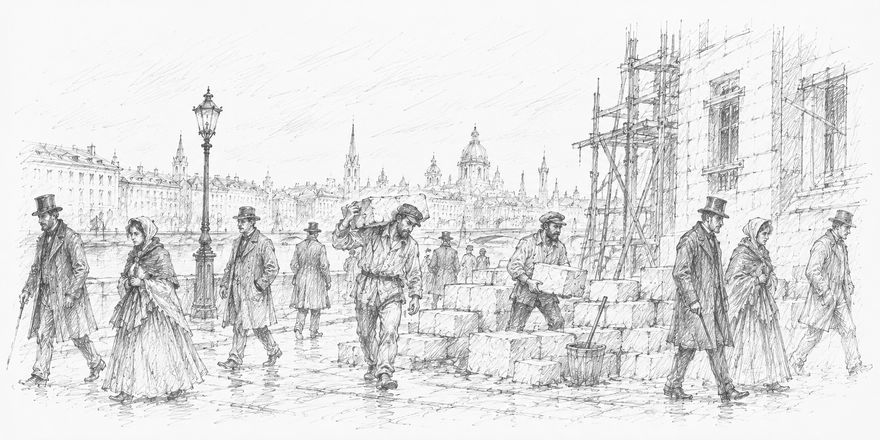
Open form. There can be many protocol standards and many kinds of product, all open source, free for anyone to take, modify and improve as they see fit; which version of a protocol, a contract or a piece of software to use is for people to choose for themselves.
Open-source licences let anyone copy, modify and redistribute code, so forking is part of everyday life in the open-source world: when a project’s direction draws dissent, the dissenters copy the code and start afresh, and each side carries on with whatever users and developers it attracts.
In 2010, after Oracle acquired Sun, most of OpenOffice’s developers copied the code and founded LibreOffice, and today most Linux distributions ship with the latter. Blockchains apply the same principle to the rules themselves: a chain’s rules are written in open-source software, the way to change the rules is to release a new version, and each person running a node decides for themselves which version to upgrade to.
In 2017, after the Bitcoin community had argued over block size for two years, some of its members split off Bitcoin Cash under new rules, and from that moment the two chains went on separately, each with its own users. Every fork is one more branch on the tree; dissent always has somewhere to go, and a disagreement can be settled in a single fork.
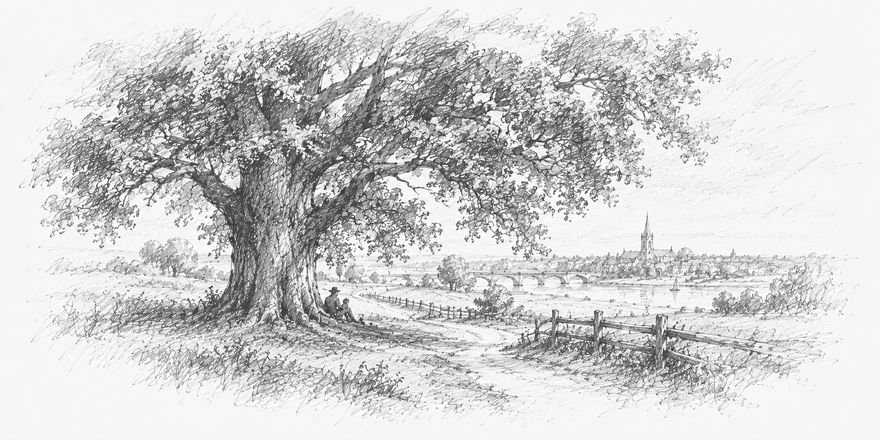
Ownerless contracts. A contract is final once deployed. Its behaviour is fixed by its code once and for all, and its author, like anyone else, can only call it. When not even its author can change a thing, there is no one who can be pressured into changing it.
A contract with an owner places its risk on the owner’s key.
In 2017, the Parity multisignature wallets all relied on a shared library contract, which had left open an initialization function anyone could call; a user mistakenly made himself its owner and then called its self-destruct function, and about 510,000 ether was frozen in several hundred wallets, where it remains to this day.
In 2022, every transfer on the Ronin bridge needed signatures from five of its nine validators; the attackers obtained five of those private keys and made off with about $600 million. Keys can be stolen, and they can be misused, and those who hold them can be pressured, bought or coerced.
An ownerless contract, final once deployed, is like a carved stone tablet: its behaviour was fixed at the moment it was carved, its author, like anyone else, can only call it, and so the door is left without a key for anyone to fish away.
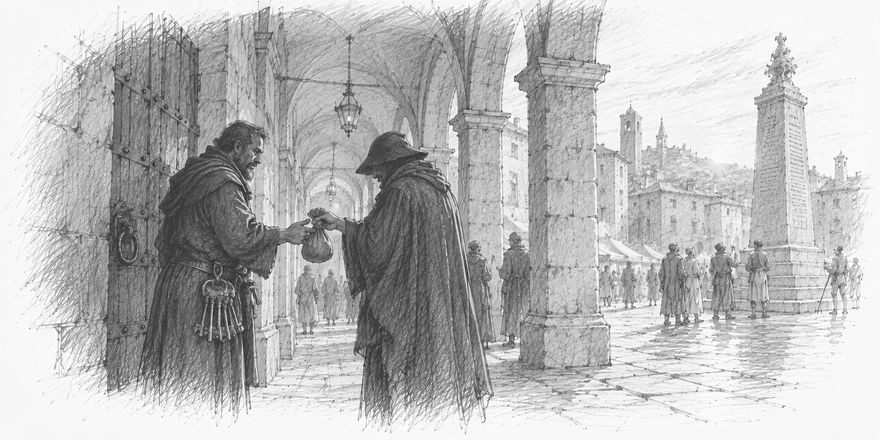
No credit expansion beyond what is staked. Every sum that moves through a protocol is real money already staked; interest, debt and credit expansion stay outside the protocol, and the risk anyone bears is capped at what they have staked.
In the American stock market of the 1920s, buyers often put up only a tenth of the price as margin and borrowed the other nine-tenths from brokers; banks lent deposits to brokers, brokers lent to speculators, and the same money was used as several sums along the chain. While prices rose, leverage multiplied gains tenfold; when prices fell in October 1929, margin calls came one after another, selling set off more selling, loans went bad, and banks failed in succession, some nine thousand between 1930 and 1933, and the savings of countless depositors vanished with them.
Some seventy years later the same structure returned in a more intricate form: subprime mortgages were packaged into securities, the securities sliced and repackaged, new securities derived from them layer upon layer, and before its bankruptcy Lehman Brothers was leveraged about thirty to one. The two crises had the same shape: an inverted pyramid, a little real money at its tip and layer upon layer of promises piled above, so that when one block at the bottom works loose the whole tower comes down. If every sum moving through a protocol is real money already staked, risk is capped at what is staked, and the tower stands only as tall as it truly is.
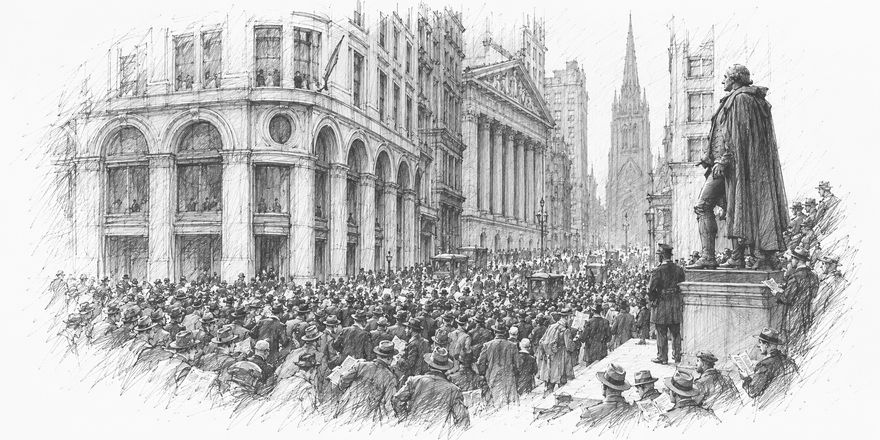
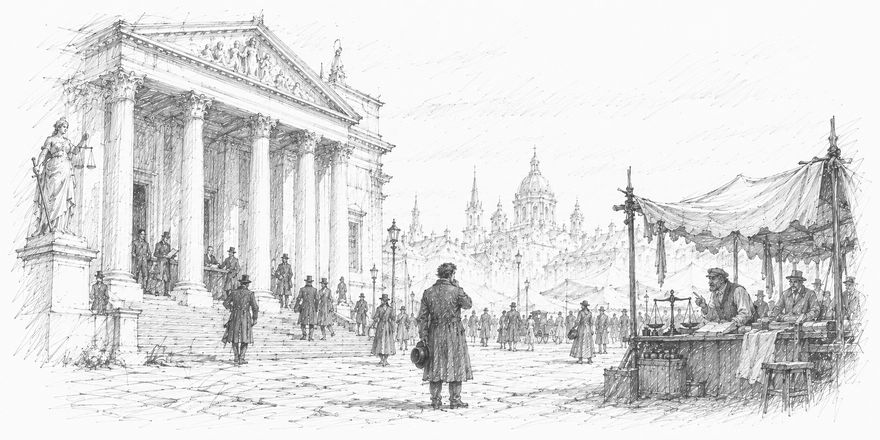
Coexistence with the old order. It runs in parallel with everything under the existing system of sovereign states. Users weigh the price and value of each service pragmatically, and where the state’s social contract is working well, they obey the law of the state. Services provided by sovereign states and services provided within the decentralized order of right compete on equal terms.
In The Wealth of Nations, Adam Smith recorded an episode from English justice: judges drew most of their income from court fees, so every court sought to draw as many cases to itself as it could. The Court of King’s Bench, set up for criminal cases only, took up civil suits on the strength of a legal fiction; the Court of Exchequer, set up only to collect the king’s revenue, drew in ordinary debt disputes as well. Litigants could therefore choose among several courts, and Smith believed this competition may well have been one reason the English courts came to be so admired.
Today the state’s courts still compete to be chosen: in 2004 the Dubai International Financial Centre set up courts that apply English common law and sit in English, and the Singapore International Commercial Court was established in 2015, both so that parties across borders would be willing to bring their cases to them. The same holds for security: private guards in the United States have long outnumbered the police, as people buy the share they need on top of what the state provides. State and non-state providers of order alike end up behind the same row of counters, chosen by the same person.
Every builder of the infrastructure is an ordinary participant. Since free riders have no place here, a contribution to the ecology as a whole is directly a contribution to one’s own position within it. Builders offer services in the ecology like anyone else, on formally equal terms with someone who arrived only yesterday.
In this system, whoever writes a contract calls contracts and sends transactions along the same road as any other address, paying the same fees; once a contract is deployed, its author stands before it exactly as someone who arrived yesterday. What they gain from the ecology can come only from how often the services they provide are chosen, and from the improvement in their own position once the ecology itself has become better.
The open-source world has long had builders of this kind. The authors of many open-source programs are also their first users: Linux developers write code on it, an editor’s author writes its next version in that same editor, and whoever fixes a bug saves their own time first; once the fixed code is public, everyone’s position improves with it. A contribution to the whole ecology and a contribution to one’s own position are here one and the same.