Decentralizing right
To split sovereignty into separate domains of right means letting these functions, which once belonged to the state, each exist on their own and carry their own price.
A person can keep records in one place, ask for a ruling in another, and complete a deal with a fourth party under the rules of a third. Every provider of a service knows its customers can leave at any time, and every departure is an individual with the power to choose, using their own distrust to price that order anew. Providers that keep people survive, providers that fail to are weeded out, and price and quality are set by those who use them.
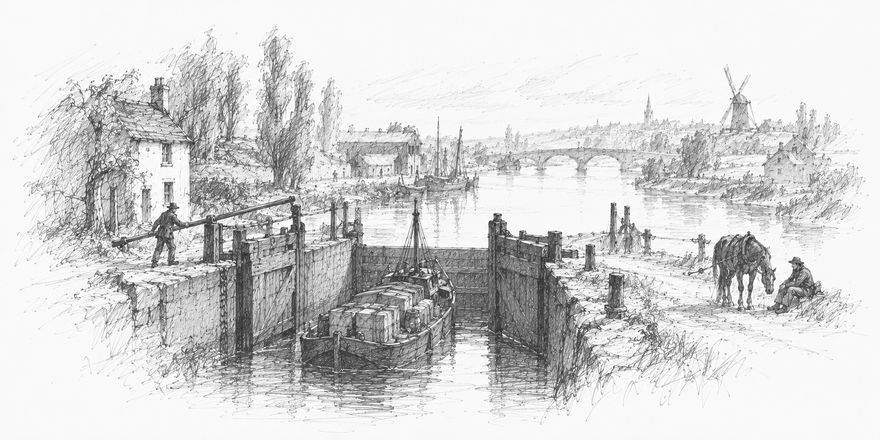
A proverb circulated in medieval Europe: city air makes you free. A serf who fled into a city and lived there a year and a day became a free man, and his lord’s claim ended there; cities competed in granting charters, drawing craftsmen and merchants with lighter taxes and fairer courts, and people voted with their feet, choosing among cities the set of rules they would live under. Yet in such a choice, what people chose was still a whole bundle: to move into a city was to take on its walls, its courts, its guilds and its taxes all at once.
Untie the fasces, and the choice comes down to each separate service. In this system, evidence, escrow and rulings are carried by separate protocols: a record made with Zikaron can be verified by any arbiter, independently of which escrow contract or which arbiter its author chose, and each can be chosen on its own and replaced on its own.
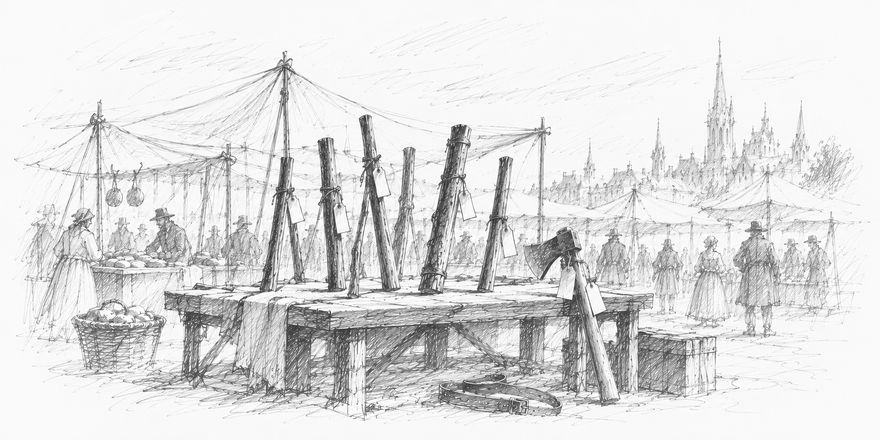
Even the axe in the fasces now carries a price tag: it stands for the power of life and death and for coercion, the last thing the state keeps in its hand. Once the bundle is untied, keeping the peace also becomes a service that can be chosen on its own and compared on price, sold by providers and bought by those who need it, like any other service.
A payment to a distant seller the buyer has never met shows this change clearly. In today’s structure of order, before the money is released it sits in the account of a bank or a platform, which may freeze it at any time. When a dispute arises, the platform rules on it; a user who contests the platform’s decision can appeal to a court at their own expense.
The arbiters are all appointed by these institutions, and the parties have no say in choosing them. The rulings carry weight because the police and prisons stand behind the courts. The records of the transaction sit in the platform’s database, and the platform alone may interpret them; a party who wants to change providers usually faces a very high cost, and the platforms know it: the core of their business logic is how to maximize what it costs a customer to leave.
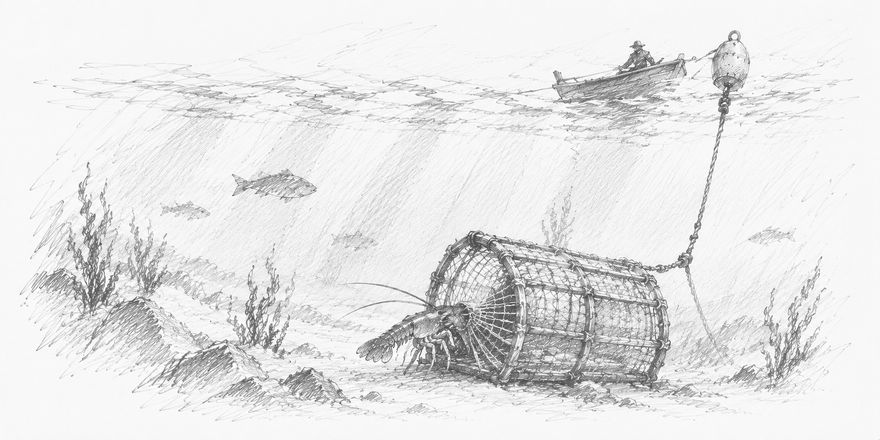
The entrance to a lobster pot is a funnel that narrows inward: a lobster gets in easily, and to get out it has to find that narrow opening.
China’s internet platforms carried this structure to its limit. In 2014, Didi and Kuaidi, fighting for the ride-hailing market, spent more than two billion yuan in a single year subsidizing drivers and riders, and a ride often cost only a few yuan; the next year the two merged, the subsidies receded, and commissions climbed step by step. Food delivery, bike sharing and community group-buying all took the same road afterwards: first burn a market down to a single player with enormous subsidies, then claw the subsidies back bit by bit.
The clawing back grew ever more refined. For the same trip, the same hotel room, regular users were shown higher prices than new ones, which people came to call “big-data price gouging of loyal customers”; on the merchants’ side, platforms forced them to “choose one of two”. The subsidy is the wide end of the funnel, the cost of leaving is the narrow end, and the whole logic of the platform business lies in making the way out ever narrower.
So under the same logic of sovereignty, the economy is crowded from top to bottom with sovereigns large and small, whose aims tend to be alike: to achieve a monopoly, to leave those who use their services with no alternative, and then to extract profit by every means available. The story has played out so many times that one can almost tell the ending from the opening.
In 2014 the investor Peter Thiel published an essay in the Wall Street Journal titled “Competition Is for Losers”, and the same year brought out Zero to One. His argument is candid to the point of coldness: in a perfectly competitive market, rivals press profits down little by little to zero, while a monopolist can set its own price, so a founder’s real goal is to find a market it can have to itself, and to hold it. Business calls the things that hold such a position a “moat”: brand, scale, and what users must pay when they leave.
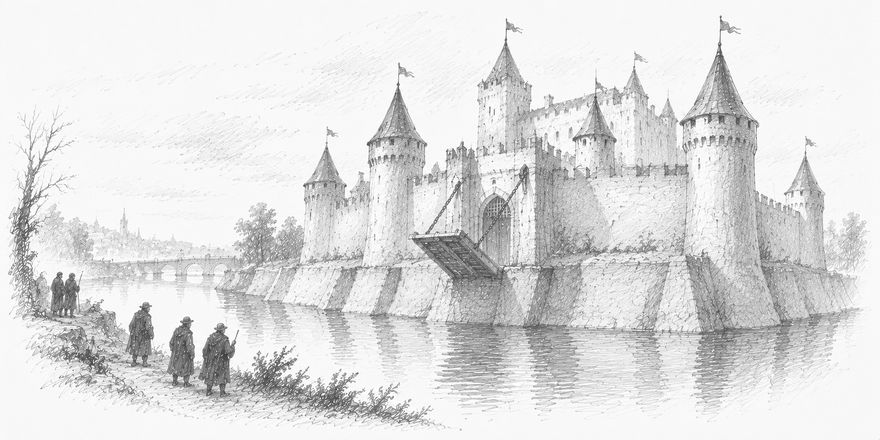
In Silicon Valley the most common form of this moat is the network effect: the more people use something, the harder it is for later arrivals to leave, and the more friends, data and habits a leaver must give up. Venture capital places its bets accordingly; a company can lose money year after year, so long as it is digging its moat, and once the moat is dug the drawbridge can be raised, and the price is set by those inside the castle.
This is the logic of sovereignty reproduced in business: first leave everyone with a single choice, then put a price on that single choice.
In a decentralized structure of right, the same money is staked in a blockchain contract and can leave only along a few paths written in advance, a course no one can change; when a dispute arises, it is decided by someone both parties chose together beforehand, whose every past ruling is open to inspection.
The ruling carries weight because the contract transfers the staked money according to the ruling of the arbiter both parties chose, and all it can dispose of is that staked sum. The records stay in the parties’ own hands, final once written, and anyone can check them afterwards. A party dissatisfied with a ruling can change arbiters next time, or even write rules of their own and serve as arbiter themselves.
Set side by side, every link rests on a new support. Before, what held them up was a centre that could give and take at will, with organized violence standing behind it; now it is enforcement guaranteed by mathematics and a way out that always stays open.
In this system, a payment to a distant seller is staked in an escrow contract whose code holds just three ways out: when the buyer confirms receipt, the money goes to the seller; whatever remains in escrow when the agreed term expires goes back to the buyer; when a dispute arises, the money is divided according to the ruling of the arbiter both parties picked in advance.
All the arbiter can do is choose among these paths, and all they can dispose of is the sum staked here; the seller’s other property and the buyer’s person lie beyond their reach. Every ruling they have made stays on the chain and can be looked through one by one before choosing them; a party who finds them biased simply picks someone else for the next deal.
Anyone who objects to the rules themselves can copy the contract’s code, change it, deploy it themselves and act as arbiter themselves, at the cost of a single on-chain transaction fee.